
Finding a few ants inside your home isn’t a serious problem at first. However, if they are carpenter ants, the scenario changes completely because these insects do more than just search for food: They tunnel through wood (that’s why they’re called carpenter ants) to build large colonies and slowly damage your property’s structure, from the inside out.
In Burnaby, carpenter ant infestations are a common issue, especially in homes located in wooded areas, older homes and properties exposed to moisture. The combination of damp weather and wooded aging construction creates the perfect environment for colonies to grow, unnoticed until damage is already there, which makes pest control in Burnaby necessary.
The sooner you identify the warning signs of carpenter ants, the easier it is to stop them before repairs become costly.
Table of Contents
What Are Carpenter Ants?
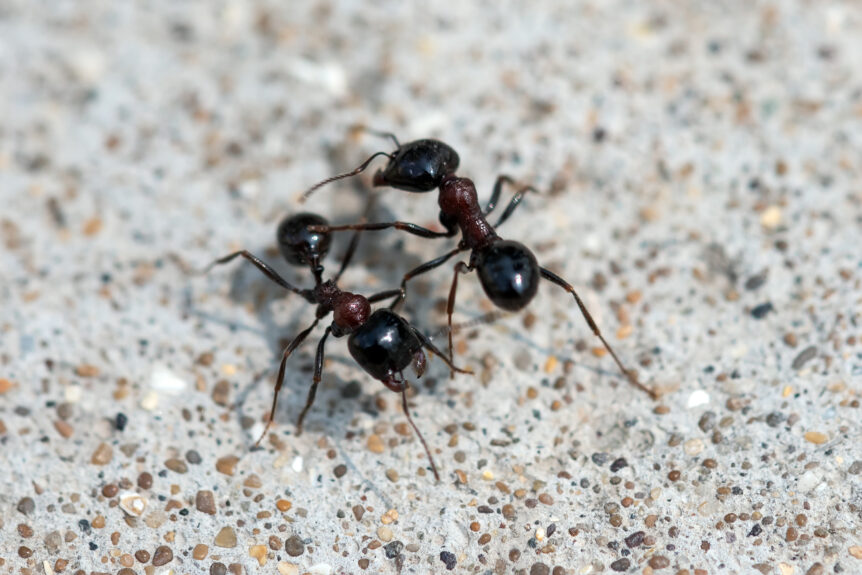
Carpenter ants are among the largest ants found in British Columbia. They are typically black, although some species appear reddish or dark brown. Depending on species and their role in the nest, the workers range from 0,6 to 1,3 cm long while queens can grow up to 2 cm. Unlike termites, they don’t eat wood, but they chew through it to build tunnels and nests.
These ants stay hidden inside walls, ceilings, crawl spaces, or damp wooden structures during the day, and are active at night.
Common Behavioural Traits
Carpenter ants are drawn to:
- Moist or rotting wood
- Water-damaged structures
- Damp basements and crawl spaces
- Tree stumps and wood piles
- Areas with plumbing leaks
Once a colony settles into a home, carpenter ants continue expanding their tunnels over time if fast action is not taken.
Why Carpenter Ants Are Common in Burnaby Homes
Burnaby’s climate creates ideal conditions for carpenter ants due to consistant rainfall and high moisture levels throughout the year. This excess moisture weakens wood and creates soft areas that carpenter ants can easily chew..
Homes surrounded by wood fences, trees, gardens, and dense landscaping face even higher risk because carpenter ants often begin nesting outdoors before spreading inside. Older homes are also vulnerable as aging wood and hidden leaks give carpenter ants easy access to nesting areas.
How Carpenter Ants Damage Your Home
Many homeowners don’t realize they have an infestation until visible damage or large numbers of ants start appearing indoors.
The damage develops quietly, with colonies staying hidden for months or even years while slowly hollowing out wooden structures. Over time, this weakens framing, support beams, window frames, floors, and wall structures, leading to:
- Structural wood damage
- Sagging floors
- Cracked walls
- Damaged insulation
- Costly repairs
The longer an infestation goes untreated , the larger the colony becomes and the more difficult it becomes to eliminate..
Early Signs of a Carpenter Ant Infestation
Seeing Large Black Ants Indoors or outdoors on structure
One of the first signs is spotting trails of large ants inside your home, especially at night, near kitchens, bathrooms, basements, or windows. A few ants may seem harmless, but carpenter ants rarely travel alone. Visible workers often point to a much larger hidden infestation.
Small Piles of Wood Shavings
You may notice small piles of sawdust-like material near walls, baseboards, windows, or door frames as these ants leave behind wood debris as they chew structures and clean nest. This material is called frass, looks rough, and fibrous (which differs from termite droppings), and contains bits of wood, insulation, and fragments of ant body parts pushed out of nesting tunnels.
Rustling Sounds Inside Walls
Large colonies can create faint rustling noises inside walls or ceilings, more noticeable at night when the home is quiet and the ants become more active. If you hear subtle scratching or movement inside wooden structures, investigate quickly.
Winged Ants Indoors
Winged carpenter ants appear during warmer months as they leave the nest to start new colonies elsewhere. Finding them indoors is a serious sign indicating that the colony is mature and well established in the structure, a significant infestation. .
Moist or Damaged Wood
Carpenter ants prefer moisture -damaged, damp, and weakened wood because it is easier to tunnel through, areas around leaking pipes, roof leaks, windows, and poorly ventilated crawl spaces attract colonies are attractive and high risk.
Where Carpenter Ants Typically Nest
Carpenter ants build both outdoor and indoor nests.
Outdoor colonies are found in:
- Tree stumps
- Firewood piles
- Dead trees
- Wooden fences
- Deck structures
From there, ants move inside through cracks, utility openings, or damaged wood. Inside nesting areas include:
- Soffits
- Wall voids
- Attics
- Crawl spaces
- Ceiling beams
- Window and door frames
- Areas near plumbing leaks
Why DIY Treatments Fail
Many homeowners try sprays or store-bought ant traps first, but carpenter ants don’t behave like other ants. The mother nest is usually outdoors with several satellite colonies hidden and spread-out inside the structures and most DIY products only target visible activity. That’s the problem.
This means that, without locating the main nesting areas, the infestation won’t stop.
Professional ant control focuses on finding nesting locations, eliminating colonies completely , and proactive preventive measures..
How to Reduce the Risk of Carpenter Ants
Preventing carpenter ants starts with moisture control and regular home maintenance. Important steps homeowners can take include:
- Fix plumbing leaks promptly
- Improve crawl space ventilation
- Remove rotting wood near your home
- Store firewood away from exterior walls
- Trim tree branches touching the house
- Seal cracks and potential entry points
- Clean gutters regularly
Reducing moisture makes your property far less attractive to carpenter ants.
How Professional Carpenter Ant Control Works
Professional treatment begins with correct identification of the carpenter ant species, followed by detailed inspection of the property. Pest control technicians identify:
- Active nesting areas
- Moisture problems
- Entry points
- Structural vulnerabilities
- Outdoor colony sources
Treatment plans vary depending on species of carpenter ants, the size and location of the infestation. It may include various strategies – baiting, dusting or liquid treatments in targeted areas along with proactive recommendations to reduce moisture and wood damage, because long-term prevention is just as important as removing the existing colony.
If you notice large ants indoors, wood shavings, winged ants, or signs of hidden nesting activity, act promptly to protect your home from costly repairs down the road.
Professional pest control in Burnaby provided by Atlas Pest and Wildlife Control helps identify the source of the infestation, eliminate colonies safely, and prevent ants from returning. Contact us for early treatment that saves money, reduces damage, and gives you peace of mind knowing your home is protected.